
A piece of furniture that has a high-quality old frame combined with high-quality fabric and good workmanship is a stunning piece of furniture. However, there are a few things to know when looking for high quality upholstered furniture. Here are some features that let you know that your furniture needs to be reupholstered or restored.
In addition, all fabric should be a high grade, 120 rub fabric, aligned with the pattern, and the skirts should have lining or weights.
Reupholstery is used to fit sofas and chairs with covering, padding, springs, and webbing. At Foxwood Furniture Restoration, we refurbish your antique furniture to bring it back to its original state. With over 70 years of experience, we offer complete and thorough furniture restorations on antiques. If you are looking to have your furniture restored or repaired, we do furniture upholstery in Brighton, MI. Contact Foxwood Furniture Restorations today for our furniture restoration services!

Here is some more helpful information when you are trying to recognize upholstered furniture for either purchasing or deciding if you should reupholster it.
Wood Furniture Composition:
Furniture Joint Construction:
The construction of a piece of furniture can tell you about the quality of the piece, look for these;
Furniture Drawer Structure:
Upholstered Furniture:
Revised 08/2024
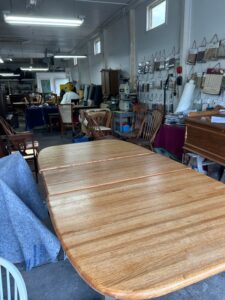
At Foxwood Restorations, we specialize in professional tabletop restoration and refinishing services that bring your antique or damaged furniture back to life. Located in Brighton, MI, we serve clients across Livingston, Oakland, and Washtenaw Counties with expert antique furniture repair and restoration. Whether your tabletop has suffered from years of wear, scratches, or fading, our craftsmen use time-tested techniques to deliver stunning results that last for generations.
Tabletop restoration is a meticulous process designed to preserve the integrity and beauty of your furniture. Here’s how we handle it at Foxwood:
This process not only enhances the aesthetic appeal but also extends the life of your piece by up to 25 years or more.
The type of wood plays a crucial role in the outcome of your tabletop refinishing. High-quality natural woods like oak, mahogany, walnut, and maple respond exceptionally well to restoration. These materials can be refinished multiple times, making them ideal for heirloom pieces.
In contrast to modern, mass-produced furniture (which often deteriorates quickly), antique wood from European or early American craftsmanship holds up beautifully. Europe has a long tradition of restoring and reusing furniture—spanning thousands of years—while America’s “throw-away” culture has led to a loss of many valuable pieces. At Foxwood, we encourage preserving these items through expert furniture refinishing services, as the demand for durable, restored antiques is on the rise.
Pro Tip: If your tabletop is made from teak or other exotic woods, we adjust our techniques to highlight their unique grains and colors. Internal Link: Learn more about types of woods used in antique furniture.
Tables are often restored in parts to save costs and focus on high-wear areas. The tabletop typically sees the most action—from spills to scratches—while the pedestal might remain in good condition. However, if the pedestal shows signs of damage (e.g., from shoe kicks, pet scratches, or fading), we recommend including it for a seamless match.
Restoring the pedestal separately or alongside the top ensures color consistency and overall harmony. This approach can also extend to matching chairs for a complete set.
By opting to restore only what’s necessary, you can keep costs down without compromising quality.
All table leaves should be refinished alongside the main top to avoid color mismatches. Leaves are often stored away, leading to less wear and a different aging process. This can result in slight variations in tone or finish. At Foxwood, we treat leaves with the same care during the tabletop restoration process, ensuring everything blends perfectly when expanded.
If you have questions about tabletop restoration in Brighton, MI, or need help with any antique furniture repair, contact us today!
If you need to repair or reupholster your chair, then you should contact Foxwood Restorations!
While chairs are used for sitting, people tend to forget how well-designed this piece of furniture is. Typically, chairs usually don’t weigh that much but are capable of supporting a couple hundred pounds. This includes when it is being rocked or tilted back on two legs. This strength is possible because of the thoughtful position of the bracings between the legs, back, and seat. Materials also play a major factor in the durability and strength of a chair.
So, it is easy to understand how a chair can lose its durability over time. Your chair’s joints could become loose, putting greater strain on the other joints which can cause them to weaken and separate. However, repairing and reupholstering your chair can be a challenge, especially if you have never done it before.
Prevent your chair from breaking or having to repair your chair

Major problems can be avoided by inspecting and repairing the minor ones as soon as they are noticed. However, if you do not catch these minor issues in time, you don’t need to worry. Foxwood Restorations are experts when it comes to repairing chairs, including the upholstery.
The chair to the right has been re-upholstered with leather and we tightened and replaced some of the joints. This is a great way to save a chair, whether it is an antique piece of furniture that has been in your family for years or just a chair that you love. We can save it and bring it back to life! Contact Foxwood Restorations for more details and any questions you may have.

Restored Piano
Piano restoration is a process that many people have not experienced first hand. For centuries, pianos have been crafted from fine and hard woods. High-quality pianos are priceless, especially if it is a rare model. However, restoring a priceless antique is not the only reason people would restore a piano.
People attempt to restore pianos for many reasons. First of all, restoring an instrument can preserve its heritage. Many pianos are product of their times, making each generation of piano different and unique. Protecting the history of the instrument can be very rewarding. There is also sentimental value, especially for heirloom.
However, the restoration process can also improve the quality and sound. Older pianos were made with higher-quality materials and craftsmanship that affect the sound of the instrument. Restoring the piano will allow the owner to bring out the full potential of any piece played. But, the process of restoring such an instrument is lengthy and delicate.
Piano restoration is a very delicate process. The restoration requires a minimum of three different technicians. A professional mover, a sound board & keyboard technician, and a wood restoration expert. All three technicians must work in conjunction for the successful outcome of the piano being restored.
However, before the restoration begins, the piano needs to be assessed by the technicians for its integrity and mechanisms. After determining what needs to be fixed, it is disassembled and cleaned. For wood restoration, this is the time to repair and refinish the instrument. Various tasks we perform while restoring the piano:
The outcome of a restored piano is lovely. An old seasoned sound board in a old piano  (at least 25 years) can be very irreplaceable. The sound board has settled through the years and the tone (to a true musician is rich and non achievable in a newer piano). The real wood of the the old piano is also replaceable. The authentic ivory keys on an old piano is something that is longer available. Plastic resin keys are now used.
We use great care and know how valuable and priceless your vintage piano is. We take all the precautions and steps to restore antique pianos, contact Foxwood Restoration Company located in Brighton Michigan for all your restoration needs.

Do you know if your antique is valuable?
At Foxwood Restorations, we get a lot of questions about determining the worth of the antiques. People who are trying to get their antiques or family heirlooms restored often don’t know their value. Understanding your antique’s worth is important for a variety of reasons such as insurance. So, we are going to help you figure out the value of your antique.
As a rule, we tell our customers that anything in good condition that passes through two generations starts increasing in value. A generation can be loosely defined as 20 to 25 years. A piece of furniture at least 10 years old is usually worth restoring. The structure of the furniture as well as the materials it is made of are superior to anything made in the last 10 years. I do not recommend restoring any furniture that is less than 10 years old. Antiques that were made in the sixties and seventies are beginning to increase in value.
In addition to age, there are plenty of other factors that can impact the worth of an item. Items that are scarce or produced in limited quantities tend to be more valuable. Craftsmanship can also be a factor. High-quality craftwork can significantly increase the value of an antique. Also, the material used can be a factor.
Using this guideline, you may wonder how to determine the value of an antique in Brighton or Howell. An object can vary tremendously in value based on its materials, age, or by its creator. Value also varies with demand, quantities available, and the specific appraisal. It is also important to know that the auction value is not the same as the retail value.
To get a true value take an average of all of these values:

If you need furniture restorations in Brighton or Howell, contact Foxwood Restorations today.