
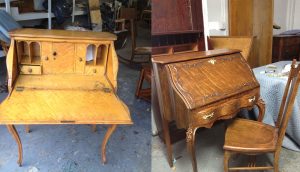
That old dining room table, antique dresser, or wooden chair might have a few scratches, faded spots, or years of wear. However, that doesn’t necessarily mean it’s time to replace it. With the right care and attention, many pieces of wood furniture can be repaired, refinished, or restored to bring back their original beauty.
Before starting a wood furniture refinishing project, it’s important to understand the different types of finishes available and what your furniture actually needs. Some pieces benefit from a completely new finish, while others only require a few repairs to preserve their original character.
A wood finish does more than make furniture look attractive. It helps protect the surface from everyday wear, moisture, and stains while enhancing the wood’s natural grain and color.
Generally, wood finishes fall into two categories: penetrating finishes and surface finishes. Each has advantages depending on the type of wood, the furniture’s age, and how the piece will be used.
Penetrating finishes soak into the wood rather than forming a thick protective coating on top. They are often chosen for their natural appearance and ability to highlight the wood grain.
Two commonly used options include:
Oil finishes can work beautifully on certain furniture pieces, especially when the goal is to maintain a natural appearance. However, they may not provide the same resistance to spills and scratches as some protective surface finishes.
Surface finishes form a protective layer over the wood. These finishes are frequently used on furniture that experiences regular handling or daily use.
Common examples include:
Applying these finishes typically involves careful surface preparation and multiple coats. Depending on the product, light sanding or smoothing between coats may be necessary to achieve an even finish.
Choosing the right finish isn’t simply about appearance. The existing finish, condition of the wood, and intended use of the furniture should all be considered.
Although the terms are often used interchangeably, furniture restoration and refinishing are not quite the same.
Furniture refinishing generally involves removing or preparing an existing finish and applying a new one. This may be appropriate for furniture with extensive surface damage, worn protective coatings, or an appearance that no longer suits your home.
Furniture restoration focuses on repairing and preserving a piece while retaining as much of its original character as possible. Depending on its condition, this might involve cleaning the existing finish, repairing damaged wood, strengthening loose joints, or carefully matching missing color.
For antique furniture, preservation is especially important. Completely stripping an original finish can sometimes reduce a piece’s historical authenticity and collectible value. Having a professional evaluate the furniture before refinishing can help avoid unnecessary changes.

Not every piece of furniture needs an extensive restoration, but many older pieces are worth considering before purchasing a replacement.
Here are a few things to evaluate:
Solid wood furniture made from oak, cherry, maple, mahogany, walnut, or pine can often be repaired and refinished successfully.
Furniture with wood veneer may also be restorable, although it requires additional care because the decorative wood layer can be relatively thin.
Scratches, water rings, fading, and worn finishes don’t automatically mean the wood underneath is damaged beyond repair.
Sometimes the biggest problem isn’t the finish at all.
A dining chair might need its joints reglued, a table may have a loose leg, or an antique cabinet could need damaged hardware replaced. Addressing these problems is just as important as improving the appearance of the furniture.
Before investing in refinishing, it’s worth evaluating the piece’s overall construction and determining what repairs are necessary to make it sturdy and functional again.
Some furniture is worth restoring because of how it was made. Other pieces are valuable because of the memories attached to them.
A handmade dresser passed down through several generations might not have a particularly high resale value, but replacing it would mean losing something irreplaceable.
Likewise, well-constructed older furniture may contain quality materials and craftsmanship that make professional restoration a worthwhile investment.
The cost of professional furniture restoration depends on the size of the piece, its condition, materials, and the amount of work required.
For some furniture, a relatively simple repair or finish touch-up may be enough. Other pieces may need extensive structural work and complete refinishing.
Comparing a professional restoration estimate with the cost of buying furniture of similar quality can help you make an informed decision.
If your furniture is structurally sound, made from quality materials, or has personal significance, restoration deserves serious consideration.
Restoring an existing piece can also be a practical way to reduce unnecessary waste. Rather than discarding furniture because its appearance has become worn or outdated, you may be able to extend its useful life for years to come.
The key is determining what level of work the furniture needs. A small scratch might only require a touch-up, while significant water damage or loose structural components could call for professional repairs.
At Foxwood Restorations, we understand that every piece of furniture has its own history, construction, and restoration needs. Whether you have an antique family heirloom or a favorite dining room set that’s showing its age, our team can help you explore the available options.
Located in Brighton, Michigan, Foxwood Restorations provides furniture restoration and repair services to customers throughout Livingston, Washtenaw, and Oakland counties. We work with a variety of wood furniture, from everyday household pieces to antique furniture requiring careful restoration.
Not sure if your furniture is worth restoring? Call Foxwood Restorations at 810-220-0123 or submit photos of your furniture for an estimate. We’ll help you determine the next steps toward preserving and enjoying your furniture again.
A good finish protects and brings out the natural beauty of the wood and work that went into the surface. When your nice wood pieces look old and weathered, refinishing them can bring them back to life. Sanding down and reapply a new finish or lacquer brings out the natural color that became dried and dull over the years
There is nothing like the feel of a superb finish on a piece of furniture. Admirers will be drawn to the surface and will marvel at the quality. Taking an old wood piece and reapplying a new finish brings the piece back to life and creates a great deal of visual depth to your furniture and home. When you give your antiques or family heirlooms a second lease at life, you’re not only preserving history, but also keeping part of your heritage alive. Reapplying a finish will help tell the story of the piece that may have lost its luster over the years. Here at Foxwood Furniture Restorations, we know the best ways, finishes, and techniques for reapplying finish. If you want a brushed technique or a spray we can help!

Finish that is applied by spraying is a quick and easy technique Spray finish will protect the surface but often is not as tough as a finish applied by a brush. Recessed areas that are hard to reach and a surface that is cylindrical alI shape. These can be difficult to brush a finish on and not achieve runs, so a spray on the finish is ideal in these cases. You can achieve a thicker, more protective coating by brushing than by spraying. That is not to say that a spray finish doesn’t look as good or have its merits. It can often be the best choice in your finishing techniques.
Who really has time to move, sand down, and reapply a new finish though? Especially if your antique is damaged and needs to be repaired. Thankfully we can help with that. At Foxwood Furniture Restorations we can do all the hard work so you can use your time for other things. As much as we all like to be a DIY’er… letting the professional team at Foxwood take over is a smarter choice. Call us for a consultation today!